

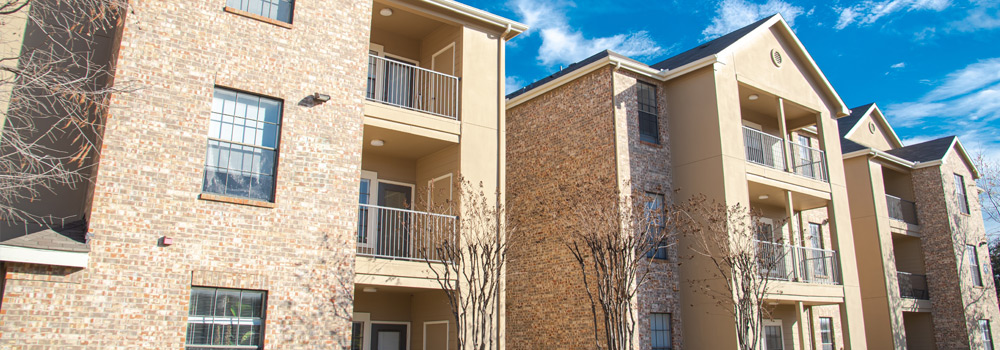
Student Housing DSTs: Why University-Driven Demand Can Be a Strong Component in a 1031 Replacement Property Portfolio
Student housing DSTs (Delaware Statutory Trusts) can be a valuable component in a diversified 1031 replacement property portfolio because they are supported by durable enrollment-driven demand, often provide attractive income potential, and offer passive exposure to a specialized housing sector that behaves differently than traditional apartments when structured with strong sponsors and conservative underwriting.
When investors think about passive replacement property options, they usually start with familiar categories:
- Multifamily
- Industrial
- Self-Storage
- Medical Office
Student housing is sometimes viewed as “niche” or more volatile.
But in the right markets, with the right structure, student housing can be one of the most resilient rental sectors in real estate, driven by a consistent need: housing near major universities.
Student housing DSTs offer investors a way to diversify beyond standard apartments while still generating passive income inside a 1031 exchange.
What Is a Student Housing DST?
A student housing DST is a Delaware Statutory Trust that owns one or more purpose-built student housing communities.
These properties are typically located near:
- large public universities
- major private colleges
- high-enrollment campuses with limited housing supply
Investors own a fractional interest in the real estate and typically receive:
- passive ownership
- professional third-party management
- monthly or quarterly income distributions
- potential appreciation at sale
The structure allows investors to access the student housing sector without owning or operating the property directly.
Why Student Housing Can Add Value in a Replacement Portfolio
Student housing is not simply “multifamily with younger tenants.”
It is a specialized housing category with unique demand drivers, lease structures, and performance characteristics.
The key benefits include:
1. Demand is anchored by universities, not job growth alone
Traditional apartments depend heavily on:
- local employment
- wage growth
- household formation
- migration trends
Student housing demand is driven by:
- university enrollment
- campus expansion
- limited on-campus housing capacity
- parental support and co-signing
- the long-term importance of higher education
In strong university markets, demand can remain durable even when the broader economy slows.
2. Lease structures can support strong income
Student housing leases are often:
- by-the-bed rather than by-the-unit
- for fixed academic terms
- supported by parental guarantees
Because of this structure, student housing can often achieve:
- higher effective rent per unit
- strong occupancy stability
- attractive cash distribution targets
Many investors use student housing as an “income enhancer” alongside more traditional DST categories.
3. Built-in diversification within the property
Student housing does not rely on a single tenant.
Revenue is spread across:
- hundreds of residents
- multiple lease agreements
- annual leasing cycles
This reduces the single-tenant concentration risk seen in many triple-net properties.
4. Recession resilience in certain cycles
Historically, college enrollment can increase during economic downturns as people return to school to improve job prospects. That can create a counter-cyclical demand element that is uncommon in other real estate sectors. Student housing is not recession-proof, but in major university markets it can be surprisingly resilient.
5. Passive exposure without operational burden
Student housing is operationally intensive.
It involves:
- annual leasing cycles
- roommate matching
- turnover management
- amenity-heavy properties
- student-focused marketing
DST structures allow investors to remain passive while experienced operators handle execution. For retiring landlords, that separation is essential.
The Reality: Student Housing Requires Specialized Execution
Student housing is compelling, but it is not “set it and forget it” real estate.
Performance depends heavily on:
- leasing execution
- university strength
- market supply discipline
- professional property management
- sponsor experience
This is why student housing must be approached carefully and sized appropriately.
What Defines a High-Quality Student Housing DST?
Student housing outcomes are highly dependent on sponsor quality and market selection.
Key diligence factors include:
1. University strength and enrollment trends
The best student housing markets typically have:
- large and growing enrollment
- stable long-term demand
- limited commuter substitution
- strong academic and economic relevance
Declining enrollment is a major red flag.
2. Supply constraints near campus
Student housing performs best when:
- land near campus is limited
- zoning restricts new development
- on-campus housing is insufficient
Oversupplied markets can pressure rents and occupancy.
3. Property location and walkability
The strongest properties are often:
- within walking distance to campus
- near transportation and retail
- in established student corridors
Distance matters significantly in this sector.
4. Sponsor and operator track record
Student housing is a specialized business.
Strong sponsors demonstrate:
- leasing success through cycles
- conservative underwriting
- disciplined expense management
- proven exit execution
A weak operator can quickly destabilize performance.
5. Conservative underwriting assumptions
Student housing projections should not rely on:
- unrealistic rent growth
- perfect occupancy every year
- aggressive expense control
The best offerings stress-test leasing and renewal scenarios.
Main Risks of Student Housing DSTs
Student housing can offer strong income and diversification, but investors must understand the risks:
1. Enrollment and university concentration risk
Demand is tied to the health of the university. If enrollment declines, housing demand can weaken.
2. Annual leasing and turnover cycles
Unlike apartments with staggered leases, student housing resets every year.
That creates:
- higher turnover
- more leasing intensity
- operational execution dependence
3. Market oversupply risk
Some university markets become overbuilt quickly. New competition can pressure rents and occupancy.
4. Operational complexity
Student housing requires:
- specialized staffing
- amenity management
- student-focused marketing
- annual leasing execution
It is more operational than industrial or standard multifamily.
5. Illiquidity
Like all DSTs, student housing is long-term and not freely tradable. Liquidity should not be assumed.
How Student Housing Fits Into a Diversified DST Portfolio
Student housing is typically best positioned as a component, not the entire portfolio.
A balanced replacement portfolio might include:
- industrial for long-lease stability
- multifamily for steady housing demand
- medical office for defensive tenancy
- student housing for income enhancement and diversification
- lodging or mineral royalties for selective higher yield
Common allocation ranges include:
- 10% to 25% student housing depending on risk tolerance
- higher allocations only for investors comfortable with leasing-cycle volatility
Student housing should be intentional, not oversized.
Student Housing DSTs vs. Traditional Multifamily
Many investors compare student housing directly to apartments.
Key differences:
Traditional multifamily:
- longer lease terms
- broader tenant base
- steadier operational profile
Student housing:
- academic-year leasing cycles
- parent-supported rent structure
- potentially higher income
- more operational intensity
Neither is “better.” Student housing is simply a different tool for diversification and income.
Who Should Consider Student Housing DSTs?
Student housing DSTs are often a strong fit for investors who:
- want higher income potential within a diversified portfolio
- value demand anchored by major universities
- are comfortable with moderate volatility
- want passive exposure without operational responsibility
- have enough exchange equity to diversify properly
Who Should Be Cautious With Student Housing DSTs?
Student housing may not be appropriate for investors who:
- want the most conservative, bond-like cash flow
- are extremely risk-averse
- need near-term liquidity
- cannot diversify due to a smaller exchange amount
- are uncomfortable with annual leasing-cycle risk
This is a specialized sector, not a core-only holding for most investors.
Student Housing DSTs: University Demand Meets Passive Income Strategy
Student housing DSTs can be a valuable component in a 1031 replacement property portfolio because they:
- are supported by durable enrollment-driven demand
- often enhance portfolio income
- diversify away from traditional apartment exposure
- reduce single-tenant concentration risk
- provide passive ownership with professional management
But outcomes depend heavily on university strength, supply discipline, sponsor quality, and conservative underwriting.
Contact Corcapa 1031 Advisors to learn more about student housing DSTs
At Corcapa 1031 Advisors, we help investors evaluate student housing offerings alongside traditional DST categories to build portfolios aligned with retirement income needs, risk tolerance, and long-term family planning goals.
Contact us today to review whether student housing DSTs belong in your replacement strategy — schedule an appointment or call (949) 722-1031.
About 1031 DST Solution Presented by Corcapa 1031 Advisors
Founded in 2011, Corcapa 1031 Advisors is a boutique financial advisory firm specializing exclusively in 1031 exchanges and tax mitigation strategies. A recognized leader in alternative real estate investments, our firm focuses on Delaware Statutory Trusts, Tenant-in-Common programs, sole-ownership transactions, and 721 UPREIT structures. Corcapa 1031 Advisors has successfully guided hundreds of clients through thousands of investments, facilitating over $1 billion in completed exchanges. With a dedicated focus on real estate solutions, Corcapa 1031 Advisors is a trusted partner for registered investment advisors and financial advisors nationwide who frequently refer clients seeking expert guidance on tax-deferred exchange strategies.
Securities offered through DAI Securities, LLC, Member FINRA/SiPC
Request 1031 Exchange DST Property Listings
Please complete the information below to register for access to current 1031 exchange replacement offerings.
We respect your privacy. We Promise To Not Sell Your Information Ever.
"*" indicates required fields